
Air-Conditioning Condensation Ceiling Mold in Fort Pierce, FL
In Florida, air-conditioning condensation is one of the most common hidden causes of ceiling mold. A clogged condensate drain, an overflowing pan, or a cold duct sweating in a hot attic drips onto the ceiling below. We remove the mold, and an HVAC technician fixes the equipment or ductwork so it does not repeat.
Your air conditioner removes moisture from indoor air, and that water has to go somewhere. It collects in a drain pan and leaves through a drain line. When either fails, or when cold ducts meet humid attic air, water lands on your ceiling.
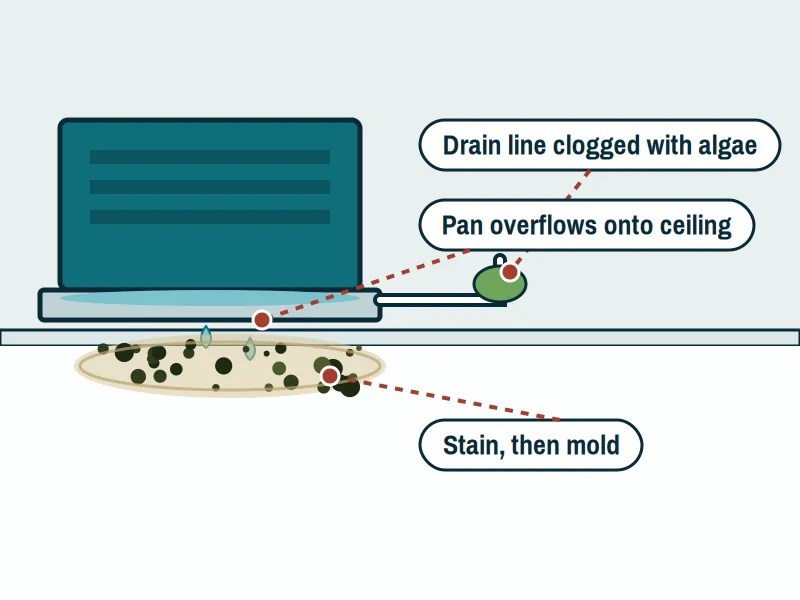
Where the water comes from
- Clogged condensate drain line. Algae and slime build up in the line. Water backs up and overflows the pan. The stain shows below the air handler.
- Rusted or cracked drain pan. The pan leaks even when the line is clear.
- Sweating ducts. Cold ducts in a hot, humid attic collect condensation, especially if insulation is torn, wet or missing.
- Sweating supply vents. Cold supply air meeting humid room air condenses on the register and ceiling around it. That gives dark spots and rings around vents.
- Duct leaks and unbalanced air. Leaking ducts pull humid attic air into the system, and closed doors and weak returns make it worse.
- Thermostat set very low. Overcooling drives surfaces below the dew point, so moisture forms on them.
The EPA advises keeping drip pans clean and drain lines unobstructed as part of moisture control.
Clues that it is the air conditioner
| Clue | Likely cause |
|---|---|
| Stain directly below the air handler | Overflowing drain pan or clogged line |
| Spots that ring a supply vent | Sweating register or humid indoor air |
| Wet stains that appear only when the AC runs | Condensation, not a roof leak |
| Damp insulation along a duct run | Torn or missing duct insulation |
| Water on the floor or a tripped float switch | Clogged drain line |
What we do
- Confirm the source. Moisture readings and a look in the attic tell condensation from a roof leak.
- Contain and remove. The mold is removed in containment. Wet drywall and insulation come out.
- Dry the space. The cavity is dried and read again.
- Hand off the equipment fix. An HVAC contractor clears or replaces the drain line and pan, repairs duct insulation, and checks airflow and sizing.
- Repair and repaint. Only after the source is fixed.
Mold remediators do not repair air-conditioning equipment. We will tell you exactly what the technician needs to look at.
Keeping it from coming back
- Have the condensate drain line flushed regularly. Your HVAC company can set a schedule.
- Make sure a float switch shuts the system off if the pan fills.
- Keep attic ducts insulated and sealed.
- Keep the thermostat at a reasonable setting and run the fan and returns freely.
- Keep indoor humidity below 60 percent, ideally 30 to 50, as the EPA advises.
Frequently asked questions
Why is there black mold around my AC vent on the ceiling?
Usually condensation. Cold air makes the vent surface and nearby ceiling cold enough for moisture to form, and dust plus damp paint feeds mold.
Can a clogged AC drain cause a ceiling stain?
Yes. When the line clogs, the pan overflows and water drips through the ceiling under the air handler.
Do I need an HVAC company as well?
Usually, yes. We remove and repair the ceiling. A licensed HVAC contractor fixes the drain, pan or ducts.
Will the mold return if I only clean the spot?
Very likely, if the condensation is still happening.