
Bathroom Ceiling Mold Removal in Fort Pierce, FL
Bathroom ceiling mold is removed by fixing the moisture source first (usually a weak or badly vented exhaust fan), sealing the room, cleaning or cutting out the affected ceiling, drying it, and repairing the surface. A typical bathroom ceiling job in Fort Pierce runs about $600 to $1,800, and small patches under 10 square feet can often be cleaned by the homeowner.
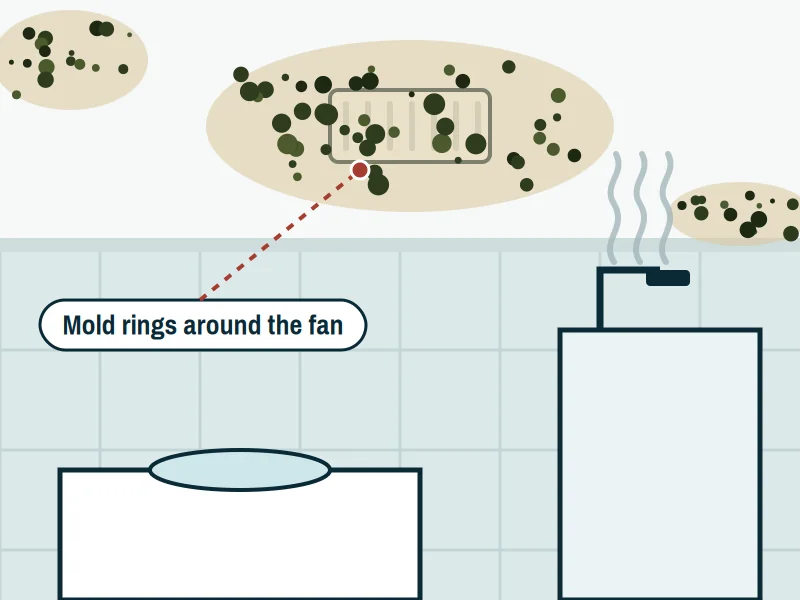
The bathroom is the most common room for ceiling mold in Fort Pierce homes. A ten-minute shower puts a lot of warm water vapor into the air, and the ceiling is the coolest surface it reaches. Add Florida humidity and a fan that does not do its job, and the ceiling stays damp long enough for mold to take hold.
If you can see dark spots around the fan, in the corners, or over the shower, you are in the right place.
Why bathroom ceilings grow mold
Almost every case traces to one of these:
- The fan vents into the attic instead of outside. This is the big one. Steam goes up the duct, hits the cooler roof deck, condenses, and soaks the insulation and ceiling. The mold shows on the bathroom ceiling and often on the roof deck too.
- The fan is too weak or too old. A common rule of thumb is about 1 cubic foot per minute of airflow per square foot of bathroom, with a 50 CFM minimum. Old fans lose airflow as the motor and duct clog.
- The fan is not run long enough. Steam lingers after the shower ends. Running the fan 20 minutes after a shower clears most of it.
- The ceiling above the shower is never dry. Without a fan and with the door closed, the shower ceiling can stay damp for hours.
- A leak above the ceiling. A roof leak or a water line can look like bathroom mold, so we check above before assuming it is steam.
What we do on a bathroom ceiling
- Inspect the ceiling and the attic side. We read moisture with a meter and look at where the fan duct actually ends.
- Write the scope. You get the removal and repair steps in writing with a price.
- Contain the room. We seal the bathroom door and vents with poly sheeting and run a HEPA air scrubber.
- Remove or clean. Soft, stained or mold-penetrated drywall is cut out. Sound painted surfaces are HEPA-vacuumed and damp-wiped.
- Dry and verify. The ceiling cavity is dried and re-read with the moisture meter.
- Repair. The ceiling is patched, textured, primed with a stain-blocking primer and painted.
- Fan report. We tell you what the fan is doing wrong, and which trade to call if the duct needs to be rerouted outside.
Clean it or cut it out?
| Situation | Usual approach |
|---|---|
| Surface spots on hard, well-painted drywall, under about 10 sq ft, no soft spots | HEPA-vacuum and damp-wipe. Homeowners can often do this safely |
| Growth around the fan, more than 10 sq ft | Licensed remediation with containment |
| Drywall is soft, stained through, or paint is bubbling | Cut out and replace the affected section |
| Mold on the roof deck or insulation above | Attic-side remediation. See attic mold above the ceiling |
| Spots return within weeks of cleaning | The moisture source is not fixed. Inspection first |
Florida requires a licensed mold remediator for mold-contaminated areas larger than 10 contiguous square feet. If your patch is smaller, our guide covers how to remove it yourself and what products are worth using.
How to keep it from coming back
- Make sure the fan vents outside, through the roof or a wall, not into the attic or soffit.
- Run the fan during the shower and for about 20 minutes after.
- Keep indoor relative humidity below 60 percent. The EPA recommends ideally 30 to 50 percent, measured with an inexpensive humidity meter.
- Wipe condensation off the shower ceiling and walls if the room stays humid.
- Fix leaks the week you find them. Wet materials that dry within 24 to 48 hours generally do not grow mold.
What bathroom ceiling mold removal costs
Most bathroom ceiling jobs run about $600 to $1,800, depending on square footage, whether drywall is replaced, and whether the fan duct needs work by another trade. The cost page breaks down every line. Prices here are estimates from public cost guides. Your written quote after an on-site look is what counts.
Frequently asked questions
Can I clean bathroom ceiling mold myself?
Yes, if it covers less than about 10 square feet and the drywall is firm. Fix the fan or leak first, wear an N95 respirator and gloves, and clean with detergent and water. The EPA does not recommend routine bleach use, and it does not fix mold inside drywall.
Why does mold keep coming back on my bathroom ceiling?
Because the moisture is still there. The usual culprits are a fan that vents into the attic, a weak fan, or a fan that is not run long enough. Cleaning without fixing the cause gives you a few clean weeks.
Is black mold on a bathroom ceiling dangerous?
Color does not tell you how risky mold is. What matters is how much there is, how long it has been there, and who is exposed. People with asthma, allergies or weak immune systems should stay out of the room until it is dealt with.
How long does bathroom ceiling mold removal take?
The removal itself is usually a day. Drying and the ceiling repair add one to three days depending on the materials and paint cure times.
Do I need to replace my bathroom fan?
Sometimes. If the fan is weak, noisy, or venting into the attic, replacing it or rerouting the duct is part of the fix. That work is done by a licensed contractor, not by a mold remediator, and we say so in the written scope.